Working together is a way of getting to know each other
Nov 02, 2026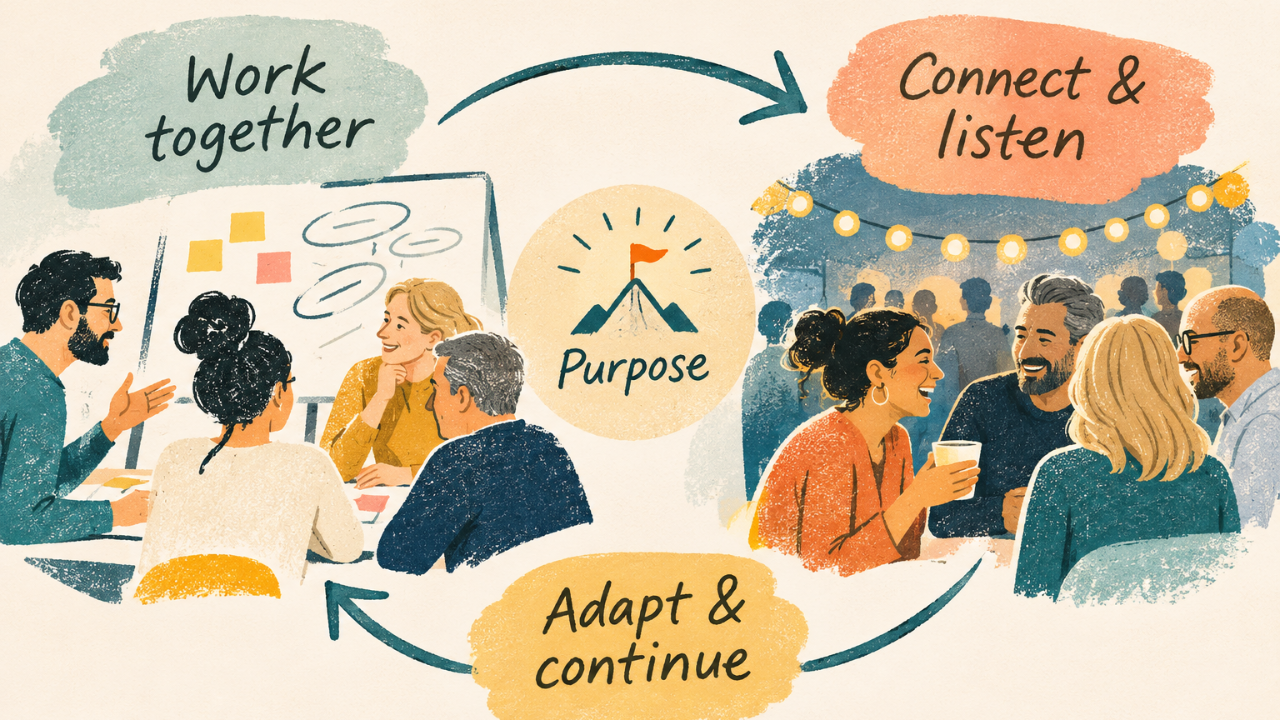
Why meaningful work and social connection belong together when we bring teams together.
Companies invest considerable time and money in bringing people together. Colleagues travel from different offices, countries and sometimes continents for a few precious days in the same place.
Often, the programme includes business updates, presentations, team activities and opportunities to socialise. All have their place, but how carefully do we think about what we put on the agenda? And how often do we consider the value of working together, rather than simply sitting in the same room? I've been thinking about how these things coexist and how we can get the most out of the time we spend together.
What if working together on something meaningful is one of the most natural ways to build relationships?
Getting to know people is about more than socialising
When we think about team bonding, we might think about fun activities we can do together, like paintball or an escape room. We plan for the team dinner or something that will get people laughing. These moments are important. They help us get to know each other outside of the demands of work.
But we're all different, and socialising isn't as easy for everyone. Some find it easy to strike up a conversation, while others will naturally recount stories of the past for hours. Not everyone is comfortable in these settings, especially when connecting with people they don't know so well. Some may even choose to avoid these invitations.
Working together offers another way to get to know one another.
When people explore a common challenge, we get to see how they think, what matters to them, what experiences they bring and how they approach problems. We begin to understand why a colleague might see something differently. Sometimes we discover that people who appear to disagree are actually trying to achieve the same thing. Sometimes we see opinions change as those discoveries shed new light on our own situation or point of view. These are valuable discoveries, particularly in organisations where people need to work across different roles, locations and backgrounds.
Creating space for meaningful conversation
I've been thinking about why and how we gather a lot recently, and recalling from my experiences facilitating gatherings just how the work and social parts aren't mutually exclusive. I see a clear pattern in how a shared purpose, thoughtful structure, freedom, energy and reflection all contribute to making valuable use of our time together.
My approach is to come prepared and informed, with a clear understanding of the challenge we're trying to address and what we want to achieve. But I'm also prepared to change the entire programme at a moment's notice if that's what the group needs. The overall challenge and intention remain constant. What emerges as important, and the process for getting there, can adapt as the gathering unfolds.
One example I can think of is a team retreat I designed and facilitated for a group of around 40 operations leaders. The organisation had experienced significant change. People had come together from different companies, with different working practices and expectations. Roles and responsibilities had evolved, and there was a need to build greater shared understanding of how the team should work together.
We designed a two-and-a-half-day gathering around some of the real challenges they were facing. Rather than simply presenting new processes or telling people what was expected of them, we created opportunities for participants to explore those questions together. They reflected individually, compared perspectives in smaller groups and worked on practical challenges involving decision-making, responsibilities, handovers and reporting.
What I particularly remember is the conversation that developed across the room on the second day.
During the evening of the first day, I checked in with key stakeholders. Through those informal conversations, I discovered needs that had surfaced during the day. We discussed what this meant for the retreat and the larger adjustments needed to the programme. I went back to my client, and together we adapted the plan for the following day.
I don't remember the exact topic we were discussing in that second-day session. What I do remember is recognising that this was a conversation worth making room for.
People began contributing from different parts of the room. They listened, responded and built on one another's ideas. My role became less about leading an activity and more about helping the conversation flow, making space for different voices while allowing the group to develop its own understanding.
It was a good reminder that structure and natural conversation aren't opposites. Thoughtful preparation creates the conditions for people to engage, but the structure also needs enough flexibility to let something valuable develop when it emerges.
The conversation doesn't end when the session does
What happened outside the formal programme was vital to the evolution of the retreat and the value it was intended to create. The conversations continued through coffee breaks and lunches, over dinner and into the evening. Participants shared experiences, discovered things they had in common and got to know colleagues they might previously have encountered only through meetings or emails.
At the same time, comments, questions and unaddressed needs could emerge in these informal settings. As I experienced during this retreat, those conversations can become an important feedback loop, helping us understand what the group needs and adapt the programme accordingly.
I think these two parts of a gathering belong together.
The structured time can help people surface expectations, understand different perspectives and work towards alignment. The informal time gives relationships space to develop, without the same agenda or pressure to produce an outcome. And what emerges informally can, in turn, influence what happens when everyone comes back together. It's a closed loop.
In this particular retreat, participants spoke positively about getting to know colleagues across different locations and understanding one another's approaches. The leader also observed more open conversations and greater trust between groups compared with an earlier gathering.
Those observations don't tell us everything about what happened afterwards. But they do tell us something about the experience people had when they were given the opportunity to work through meaningful questions together.
Designing the whole gathering
When planning a team gathering, it's easy to think about the formal programme and social activities as separate parts of the event. One is where we do the work. The other is where we get to know each other. But perhaps that separation isn't particularly helpful. The work itself can create connection. And the relationships we develop socially can help us communicate and collaborate more comfortably when we return to work.
This doesn't mean every social event needs a complicated programme or that every gathering needs to become a strategy retreat. Sometimes a simple shared reflection is enough. What have we achieved together? What have we learned? What do we need to understand better? What would make working together easier?
The important thing is to choose something that genuinely matters to the people in the room and create conditions where they can contribute.
For me, that means being clear about the purpose, preparing carefully and remaining open to what emerges. A well-designed agenda is valuable, but it shouldn't become something we follow simply because it's there. If the group needs something different to achieve the intended outcome, we should be prepared to adapt.
It also means leaving space in the programme. Not every minute needs to be filled. People need time to think, process what they've heard, continue conversations and connect naturally.
Making the most of being together
Before planning your next team gathering, it might be worth asking what you want people to experience beyond simply enjoying the day. What would be valuable for them to understand about each other? What shared challenges could they explore? What conversations would be worth starting? And how could the rest of the gathering give those conversations room to continue?
Bringing people together is an opportunity. Particularly when time together is rare, we can make that opportunity more meaningful by thinking about the whole experience, not just what's on the agenda.
A well-designed gathering doesn't have to choose between getting work done and building relationships. Sometimes, working together is precisely how those relationships begin to grow.
Planning a team gathering?
Bringing people together is an opportunity to create shared understanding, strengthen relationships, and make meaningful progress. But a successful gathering starts long before everyone arrives.
I've created a free Gathering Brief to help leaders clarify why they're bringing people together, what they want to achieve, and how to prepare for meaningful participation.